

What is the state of charge (SOC) of a forklift battery?
As a supplier of forklift batteries, I often encounter questions from customers about the state of charge (SOC) of forklift batteries. Understanding the SOC is crucial for the efficient and safe operation of forklifts. In this blog, I will explain what SOC is, why it matters, how to measure it, and how it relates to our products, such as the 25.6V 10Ah for Forklift Lithium Ion Battery Pack and 48V 100Ah for Forklift Lithium Ion Battery.
What is the state of charge (SOC)?
The state of charge (SOC) of a battery is a measure of the amount of electrical energy stored in the battery relative to its maximum capacity. It is usually expressed as a percentage, where 0% represents a completely discharged battery and 100% represents a fully charged battery. For example, if a forklift battery has a SOC of 50%, it means that the battery has half of its maximum energy capacity remaining.
The SOC is an important parameter because it directly affects the performance and runtime of the forklift. A forklift with a low SOC may experience reduced power, slower lifting speeds, and shorter operating times. On the other hand, overcharging a battery can lead to decreased battery life, increased heat generation, and potential safety hazards. Therefore, maintaining an appropriate SOC is essential for maximizing the efficiency and lifespan of the forklift battery.
Why does SOC matter for forklift batteries?
- Optimal performance: Forklifts rely on their batteries to provide the power needed for lifting, moving, and operating various functions. A battery with a high SOC ensures that the forklift can operate at its full capacity, providing consistent power and performance. This is especially important in busy warehouses or industrial settings where forklifts are used continuously.
- Extended battery life: Properly managing the SOC can significantly extend the lifespan of the forklift battery. Overcharging or deep discharging a battery can cause irreversible damage to the battery cells, leading to reduced capacity and shorter battery life. By maintaining the SOC within the recommended range, the battery can be used for a longer period, reducing the need for frequent battery replacements.
- Safety: Overcharging a battery can generate excessive heat, which can lead to thermal runaway and potentially cause a fire or explosion. Similarly, a deeply discharged battery may experience voltage drops that can damage the battery management system or other components of the forklift. By monitoring and controlling the SOC, the risk of safety incidents can be minimized.
- Cost savings: By optimizing the SOC, forklift operators can reduce energy consumption and extend the battery life, resulting in significant cost savings over time. Additionally, accurate SOC monitoring can help prevent unexpected downtime due to battery failure, which can disrupt operations and lead to lost productivity.
How to measure the state of charge (SOC) of a forklift battery?
There are several methods for measuring the SOC of a forklift battery, each with its own advantages and limitations.
- Voltage-based measurement: One of the simplest and most common methods is to measure the battery voltage. The voltage of a battery is directly related to its SOC, with a fully charged battery having a higher voltage than a discharged battery. However, this method is not very accurate, as the voltage can also be affected by factors such as temperature, load, and battery age.
- Coulomb counting: This method involves measuring the amount of charge that has been added or removed from the battery over time. By integrating the current flowing in and out of the battery, the SOC can be calculated. Coulomb counting is more accurate than voltage-based measurement, but it requires a precise current sensor and a reliable battery management system.
- Impedance spectroscopy: This technique measures the impedance of the battery at different frequencies. The impedance of a battery changes with its SOC, allowing for a more accurate estimation of the SOC. However, impedance spectroscopy is a complex and expensive method, and it is not commonly used in everyday forklift applications.
- Battery management systems (BMS): Many modern forklift batteries are equipped with a BMS, which can continuously monitor and manage the SOC of the battery. The BMS uses a combination of voltage, current, and temperature sensors to accurately calculate the SOC and provide real-time information to the forklift operator. Some BMSs can also control the charging and discharging process to ensure that the battery is maintained within the recommended SOC range.
SOC and our forklift battery products
At our company, we understand the importance of SOC management for forklift batteries. That's why our 25.6V 10Ah for Forklift Lithium Ion Battery Pack and 48V 100Ah for Forklift Lithium Ion Battery are designed with advanced battery management systems that provide accurate SOC monitoring and control.

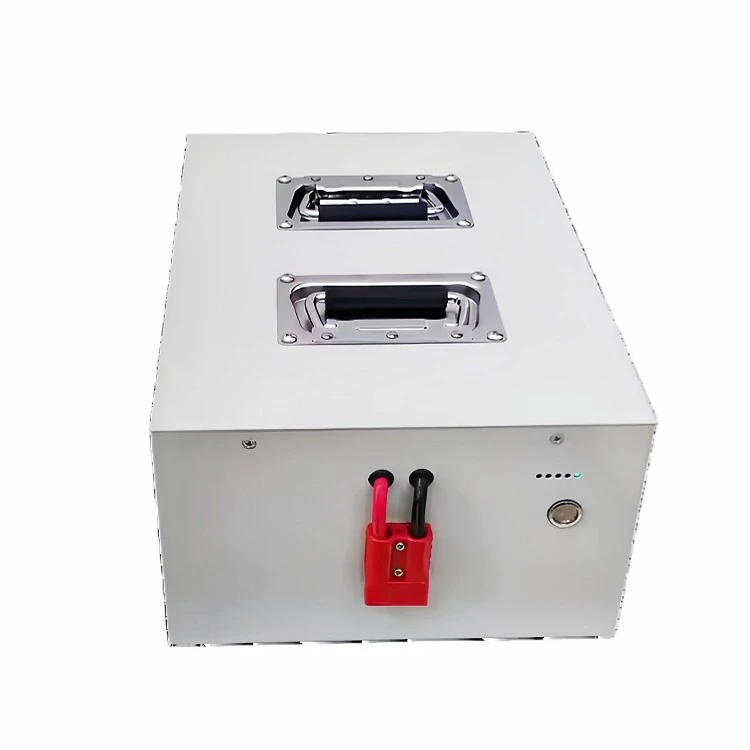
Our lithium-ion batteries offer several advantages over traditional lead-acid batteries when it comes to SOC management. Lithium-ion batteries have a more stable voltage profile, which makes it easier to accurately measure the SOC using voltage-based methods. Additionally, lithium-ion batteries can be charged and discharged more frequently without experiencing significant capacity loss, allowing for more flexible SOC management.
Our BMSs are designed to ensure that the battery is charged and discharged safely and efficiently. They can prevent overcharging, over-discharging, and overheating, protecting the battery from damage and extending its lifespan. The BMS also provides real-time SOC information to the forklift operator, allowing them to make informed decisions about when to charge the battery and how to optimize its use.
Maintaining the optimal SOC for forklift batteries
To maintain the optimal SOC for forklift batteries, the following best practices should be followed:
- Regular charging: Forklift batteries should be charged regularly to maintain a high SOC. It is recommended to charge the battery after each shift or when the SOC reaches a certain level (e.g., 20-30%). Avoid deep discharging the battery, as this can cause irreversible damage.
- Avoid overcharging: Overcharging a battery can lead to decreased battery life and potential safety hazards. Use a charger that is specifically designed for the forklift battery and follow the manufacturer's charging instructions.
- Temperature management: The temperature of the battery can affect its SOC and performance. Keep the battery in a cool and dry environment, and avoid exposing it to extreme temperatures. If the battery gets too hot during charging or operation, allow it to cool down before continuing.
- Use a battery management system (BMS): A BMS can provide accurate SOC monitoring and control, ensuring that the battery is used safely and efficiently. Make sure that the BMS is properly installed and calibrated, and follow the manufacturer's recommendations for its use.
- Regular maintenance: Regularly inspect the battery for signs of damage, such as leaks, corrosion, or swelling. Clean the battery terminals and connections to ensure good electrical contact. Follow the manufacturer's maintenance schedule for the battery and the forklift.
Contact us for procurement and洽谈
If you are interested in our forklift battery products or have any questions about the state of charge (SOC) or battery management, please feel free to contact us. Our team of experts is ready to provide you with detailed information, technical support, and customized solutions to meet your specific needs. We are committed to providing high-quality forklift batteries and excellent customer service to help you optimize the performance and efficiency of your forklift operations.
References
- Battery Council International (BCI). (2023). Battery Basics: State of Charge. Retrieved from https://www.batterycouncil.org/
- National Renewable Energy Laboratory (NREL). (2022). Battery Management Systems for Electric Vehicles. Retrieved from https://www.nrel.gov/
- International Electrotechnical Commission (IEC). (2021). IEC 61960: Secondary cells and batteries containing alkaline or other non - acid electrolytes - Portable sealed rechargeable single cells - Lithium - ion cells and batteries.