

As a supplier of 72V 100Ah marine batteries, I often encounter questions from customers regarding the electromagnetic interference (EMI) emission of our products. EMI is a critical aspect to consider, especially in marine applications where electronic systems are abundant and sensitive. In this blog, I will delve into what EMI emission is, how it relates to our 72V 100Ah marine battery, and why it matters in the marine environment.
Understanding Electromagnetic Interference (EMI)
Electromagnetic interference, also known as radio-frequency interference (RFI) when it occurs in the radio frequency spectrum, is the disturbance that affects an electrical circuit due to either electromagnetic induction or electromagnetic radiation emitted from an external source. EMI can disrupt the normal operation of electronic devices, leading to malfunctions, data errors, or even complete system failures.
There are two main types of EMI: conducted and radiated. Conducted EMI travels along power lines and signal cables, while radiated EMI is emitted into the air as electromagnetic waves. Both types can cause problems in marine electronics, which are often in close proximity to each other and operate in a harsh environment.
EMI Emission of a 72V 100Ah Marine Battery
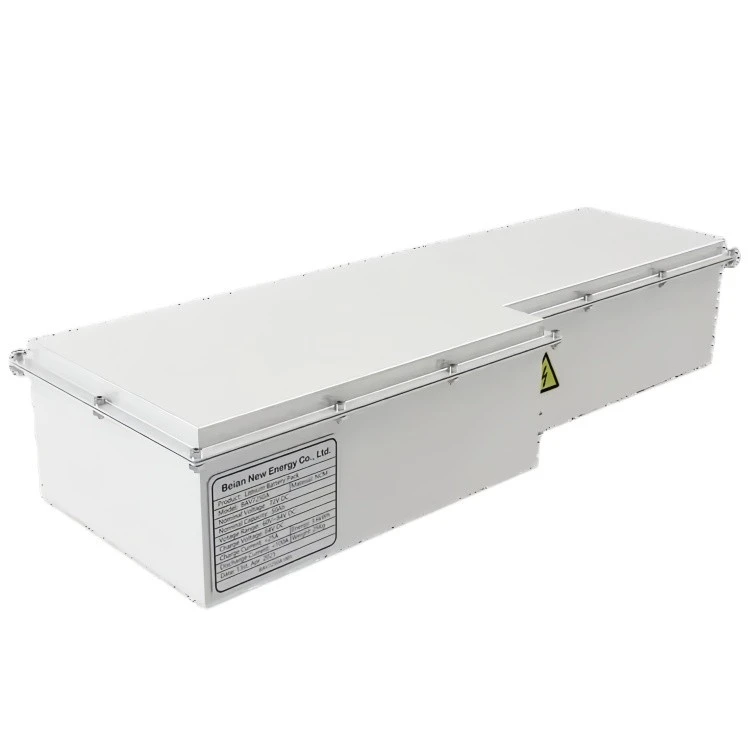
Our 72V 100Ah marine battery is designed to meet the high - energy demands of marine vessels. However, like any electrical device, it can generate EMI during its operation. The battery's internal components, such as the battery cells, battery management system (BMS), and charging circuits, can be sources of EMI.
The battery cells themselves can generate EMI due to the chemical reactions taking place inside them. As the battery charges and discharges, ions move within the cells, creating electrical currents. These currents can produce electromagnetic fields, which may radiate or conduct EMI.
The BMS, which is responsible for monitoring and controlling the battery's performance, is another potential source of EMI. The BMS contains electronic components such as microcontrollers, sensors, and communication interfaces, all of which can generate electromagnetic noise. For example, the switching operations of the BMS's power transistors can produce high - frequency noise that may interfere with other electronic devices on the boat.
Charging circuits are also a significant source of EMI. When the battery is being charged, the charging current can cause voltage fluctuations and generate electromagnetic fields. These fields can radiate EMI into the surrounding environment or conduct it along the power cables.
Impact of EMI on Marine Electronics
In a marine environment, EMI can have a significant impact on the performance of electronic systems. Marine vessels are equipped with a wide range of electronic devices, including navigation systems, communication equipment, and safety sensors. These devices rely on accurate electrical signals to function properly, and EMI can disrupt these signals.

For example, EMI can cause interference with radio communication systems, leading to poor signal quality, static, or even complete loss of communication. Navigation systems, such as GPS receivers, can also be affected by EMI, resulting in inaccurate position readings or loss of satellite signals. Safety sensors, such as radar and sonar systems, may produce false alarms or fail to detect obstacles due to EMI interference.
Mitigating EMI Emission
At our company, we take several measures to mitigate the EMI emission of our 72V 100Ah marine battery. First, we use high - quality components in the design and manufacturing of our batteries. For example, we select battery cells with low internal resistance and stable chemical properties to reduce the amount of EMI generated by the cells.
We also implement advanced shielding techniques to reduce radiated EMI. The battery casing is designed to act as a Faraday cage, which can block electromagnetic waves from escaping the battery. Additionally, we use shielded cables for power and signal connections to prevent conducted EMI from traveling along the cables.
In the design of the BMS and charging circuits, we use filtering techniques to reduce high - frequency noise. For example, we incorporate low - pass filters in the power supply lines to block high - frequency components of the electrical signals. We also optimize the layout of the printed circuit boards (PCBs) to minimize electromagnetic coupling between different components.
Comparison with Other Marine Batteries
Our 72V 100Ah Marine Battery is designed to have lower EMI emission compared to some other marine batteries on the market. For instance, when compared to traditional lead - acid batteries, our lithium - ion battery has a more stable chemical reaction, which results in less EMI generation.
In addition, our battery's advanced BMS and charging circuit design further reduce EMI. Other batteries may not have the same level of shielding and filtering, making them more prone to EMI problems. We also offer a 25.6V 210Ah Lithium Battery Pack for Electric Boats and a 24V 90Ah LiFePO4 Battery with RS485, both of which are designed with similar EMI - reduction techniques.
Importance of EMI Compliance
EMI compliance is crucial for marine batteries. Many countries and international organizations have established standards and regulations regarding EMI emission for electrical and electronic devices. For example, the International Electrotechnical Commission (IEC) has developed standards such as IEC 61000 - 6 - 3 and IEC 61000 - 6 - 4, which specify the limits of EMI emission for industrial and residential environments.
By ensuring that our 72V 100Ah marine battery complies with these standards, we can guarantee that our product is safe and reliable for use in marine applications. Compliance also helps to protect other electronic devices on the boat from EMI interference, ensuring the overall performance and safety of the vessel.
Conclusion
In conclusion, the EMI emission of a 72V 100Ah marine battery is an important consideration for marine applications. While the battery can generate EMI during its operation, we have taken several measures to mitigate this emission and ensure that our product meets the highest standards of quality and reliability.
If you are in the market for a high - performance marine battery with low EMI emission, our 72V 100Ah Marine Battery is an excellent choice. We also offer other marine battery options, such as the 25.6V 210Ah Lithium Battery Pack for Electric Boats and the 24V 90Ah LiFePO4 Battery with RS485.
If you have any questions or would like to discuss your battery requirements, please feel free to contact us for procurement and further discussions.
References
- IEC 61000 - 6 - 3: Electromagnetic compatibility (EMC) - Part 6 - 3: Generic standards - Emission standard for residential, commercial and light - industrial environments.
- IEC 61000 - 6 - 4: Electromagnetic compatibility (EMC) - Part 6 - 4: Generic standards - Emission standard for industrial environments.