

In the era of sustainable energy, residential Energy Storage Systems (ESS) have emerged as a game - changer for homeowners. As a residential ESS supplier, I often receive inquiries about one crucial aspect: the charging time of these systems. Understanding the charging time is essential for homeowners as it directly impacts the system's usability and efficiency.
Factors Affecting the Charging Time of Residential ESS
Battery Capacity
The capacity of the battery is one of the most significant factors influencing charging time. A larger capacity battery, such as the Household LiFePO4 51.2V 200Ah Energy Storage Battery, will naturally take longer to charge compared to a smaller one. The energy storage capacity of this battery is relatively high, which means it can store a large amount of electrical energy. But to fill this "energy reservoir," more time and power are required.
Mathematically, if we assume a constant charging power (P), and the battery capacity is (C) (in watt - hours), the charging time (t) can be approximated by the formula (t=\frac{C}{P}). For example, if a battery has a capacity of 10 kWh and the charging power is 1 kW, the theoretical charging time would be 10 hours. However, in real - world scenarios, this is just a rough estimate.
Charging Power
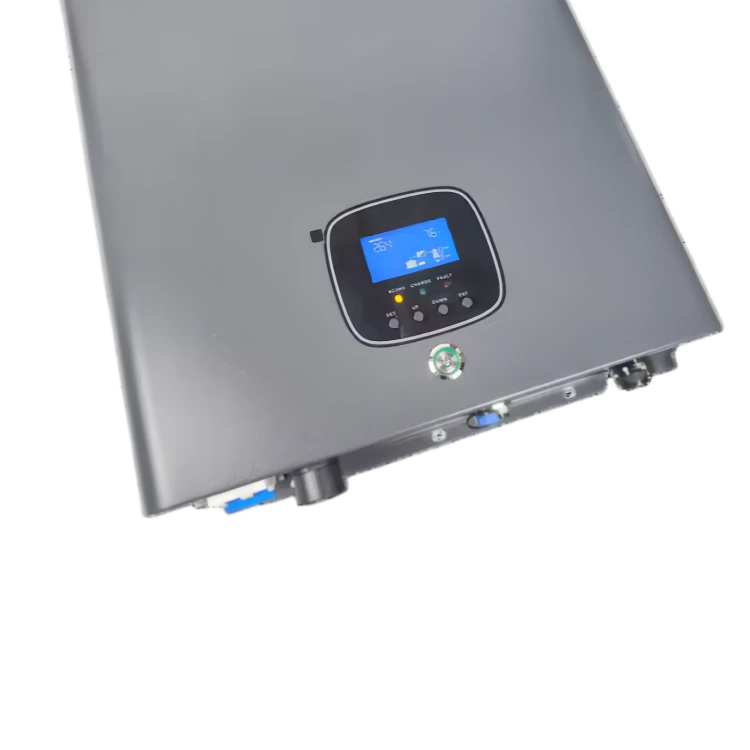
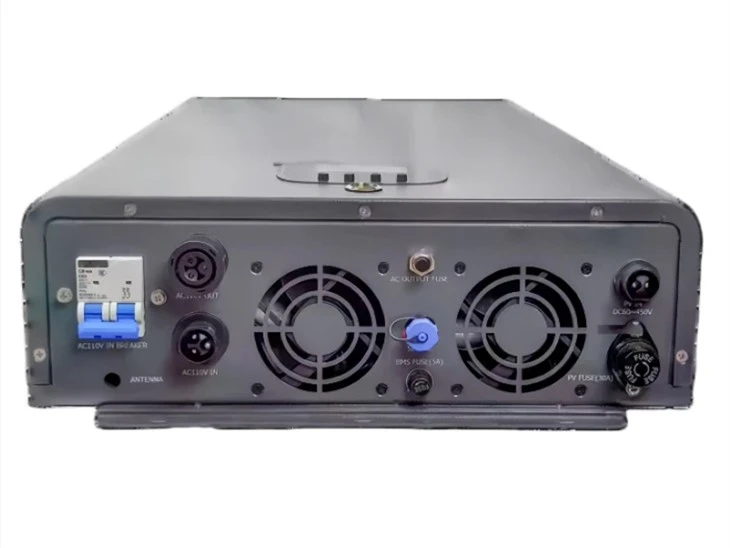
The charging power is another key determinant. Higher charging power can significantly reduce the charging time. Our All - in - One Integrated 2.6kWh Energy Storage System is designed with a certain maximum charging power. If a homeowner can provide a power source with a high enough output that matches or approaches the system's maximum charging power, the system will charge more quickly.
For instance, if a residential ESS has a maximum charging power of 2 kW and a capacity of 4 kWh, it could potentially be fully charged in about 2 hours under ideal conditions. But in practice, there are limitations. The power grid may not always be able to supply the maximum required power, especially during peak demand periods. Also, the battery management system (BMS) in the ESS may limit the charging power to protect the battery from over - charging and over - heating.
Charging Method
There are different charging methods for residential ESS, and each has an impact on the charging time.
- Trickle Charging: This is a slow and gentle charging method. It is often used for maintaining the battery's charge level rather than for rapid charging. Trickle charging provides a very low - current charge over an extended period. It is suitable for long - term storage of the battery or when the battery is close to full and needs only a small amount of additional charge. However, if used to fully charge a depleted battery, it can take an extremely long time.
- Fast Charging: Fast - charging technologies are becoming more common in residential ESS. They can significantly reduce the charging time. But fast charging also has its drawbacks. It can generate more heat, which may accelerate battery degradation over time. Our Energy Storage System BA - ESS - B100S16 - F Solar Energy System is compatible with fast - charging in some configurations, but we always recommend following the manufacturer's guidelines to ensure the longevity of the battery.
State of Charge (SOC)
The initial state of charge of the battery also affects the charging time. If the battery is almost empty, it will take longer to charge compared to when it is already partially charged. When the battery is close to full, the charging process usually slows down to avoid over - charging. This is because most modern batteries use a multi - stage charging process. In the initial stage, a relatively high current is applied to quickly charge the battery to a certain level (e.g., 80% SOC). Then, the charging current is gradually reduced to a lower level for the final stage of charging to ensure the battery is safely and fully charged.
Real - World Examples of Charging Times
Let's take a look at some real - world examples based on different scenarios.
Scenario 1: Charging from a Standard Wall Outlet
Many homeowners may initially think of using a standard wall outlet to charge their residential ESS. A typical wall outlet in a household provides a power of around 1.5 - 2 kW. If we consider a 5 kWh residential ESS, using a 2 kW wall outlet, the theoretical charging time would be 2.5 hours. But in reality, due to losses in the charging process (such as heat loss in the charger and the battery), the actual charging time may be closer to 3 - 3.5 hours.
Scenario 2: Charging with a Solar Panel System
When using a solar panel system to charge the ESS, the charging time depends on the solar irradiance, the size and efficiency of the solar panels, and the capacity of the ESS. On a sunny day with high solar irradiance, a well - sized solar panel system can charge a residential ESS relatively quickly. For example, a 3 kWh ESS may be charged in 3 - 4 hours if the solar panel system can provide an average charging power of around 1 kW during the charging period. However, on cloudy days, the charging time will be significantly extended as the solar irradiance is much lower.
Scenario 3: Charging with a High - Power Charging Station
If a homeowner has access to a high - power charging station, the charging time can be greatly reduced. For a large - capacity 10 kWh ESS, a high - power charging station with a power output of 5 kW could potentially charge the battery in about 2 hours. But high - power charging stations are not as common in residential settings, and they may also require special electrical installations and approvals.
Importance of Understanding Charging Time for Homeowners
Understanding the charging time of a residential ESS is crucial for homeowners for several reasons.
Energy Management
Homeowners can better manage their energy consumption based on the charging time. For example, if they know that their ESS takes 4 hours to charge from a certain power source, they can plan their energy usage during this period. They can use other energy - efficient appliances or even rely on the grid if necessary to avoid overloading the charging process.
Cost - Efficiency
By understanding the charging time, homeowners can take advantage of off - peak electricity rates. If the electricity rate is lower during the night, they can schedule the charging of their ESS during this period. This way, they can save on the cost of charging the battery.
Backup Power Planning
In case of a power outage, homeowners need to know how long it will take to recharge their ESS after using it as a backup power source. If they have a clear understanding of the charging time, they can be better prepared for future power outages and ensure that their ESS is ready to provide backup power when needed.
How Our Company Can Help
As a residential ESS supplier, we are committed to providing our customers with the best solutions regarding charging time. We offer a range of products with different charging capabilities to meet the diverse needs of homeowners.
Our technical support team can help homeowners calculate the estimated charging time based on their specific power sources, battery capacity requirements, and usage scenarios. We also provide detailed installation and operation guides to ensure that the ESS is installed and used correctly to optimize the charging process.
If you are considering purchasing a residential ESS and have questions about charging time or any other aspects of our products, we encourage you to contact us for a detailed consultation. Our experts are ready to assist you in making the right choice for your home energy storage needs. Whether you are interested in the Household LiFePO4 51.2V 200Ah Energy Storage Battery, the All - in - One Integrated 2.6kWh Energy Storage System, or the Energy Storage System BA - ESS - B100S16 - F Solar Energy System, we can provide you with all the necessary information and support for a successful purchase and installation.
References
- "Battery Technology Handbook" by David Linden
- "Energy Storage for Sustainable Power Systems" by S. Subramaniam