

What Size Solar Inverter Do I Need?
As a supplier of solar inverters, I often get asked the question: "What size solar inverter do I need?" It's a crucial question because choosing the right size inverter is essential for the efficient and effective operation of your solar power system. In this blog post, I'll guide you through the process of determining the appropriate size of a solar inverter for your specific needs.
Understanding the Basics of Solar Inverters
Before we delve into sizing, let's briefly understand what a solar inverter does. Solar panels generate direct current (DC) electricity, but most household appliances and the electrical grid use alternating current (AC). A solar inverter converts the DC electricity produced by solar panels into AC electricity that can be used in your home or fed back into the grid.
There are different types of solar inverters, including string inverters, micro - inverters, and hybrid inverters. String inverters are the most common and are connected to a series (string) of solar panels. Micro - inverters are installed on each individual solar panel, while hybrid inverters can work with both solar panels and energy storage systems like batteries.

Factors Affecting Solar Inverter Size
-
Solar Panel Capacity
The total power output of your solar panels is a primary factor in determining the inverter size. Solar panels are rated in watts (W), and you need to know the combined wattage of all the panels in your system. For example, if you have 10 solar panels, each with a rating of 300W, your total solar panel capacity is 3000W or 3kW.
As a general rule, the inverter's capacity should be equal to or slightly larger than the total solar panel capacity. However, it's important not to oversize the inverter too much, as it can lead to inefficiencies and increased costs. -
Peak Sun Hours
Peak sun hours refer to the number of hours per day when the sunlight is strong enough to generate the maximum power from your solar panels. Different regions have different peak sun hours. For instance, areas closer to the equator typically have more peak sun hours than regions at higher latitudes.
If you live in an area with fewer peak sun hours, you may need a larger inverter to make the most of the limited sunlight. On the other hand, in areas with abundant sunlight, you can size the inverter more conservatively. -
Load Requirements
You also need to consider the electrical load in your home or business. This includes all the appliances and devices that will be powered by the solar system. Make a list of all your electrical appliances, their power ratings, and how often they are used.
For example, a refrigerator may consume around 150 - 200W, a TV around 100 - 200W, and a washing machine around 300 - 500W. Add up the power requirements of all the appliances that you want to run simultaneously to get an estimate of your peak load. The inverter should be able to handle this peak load without overloading. -
Future Expansion
If you plan to expand your solar panel system in the future, it's a good idea to choose an inverter with some extra capacity. This way, you won't have to replace the inverter when you add more panels. However, keep in mind that oversizing too much can lead to lower efficiency at lower power levels.
Calculating the Required Inverter Size
- Simple Calculation for Residential Systems
For a basic residential solar system, you can start by calculating the total solar panel wattage. Let's say you have a solar panel system with a total capacity of 5kW. A good starting point would be to choose an inverter with a capacity of around 5 - 5.5kW. This allows for some margin in case of slight variations in panel output. - Accounting for Load and Efficiency
To be more precise, you need to consider your load requirements and the efficiency of the inverter. Inverters are not 100% efficient, and their efficiency can range from 90% - 98%. For example, if your peak load is 4kW and you assume an inverter efficiency of 95%, you would need an inverter with a capacity of approximately 4kW / 0.95 = 4.21kW.
Examples of Suitable Inverters
Here are some examples of solar inverters that might be suitable for different system sizes:
- If you have a relatively small solar panel system with a capacity of around 3kW, the High Quality Solar Inverter 3Kw OFF Grid Hybrid Solar could be a great choice. It's designed for off - grid applications and can handle the power output of a 3kW solar panel array.
- For a medium - sized system with a capacity of 5kW, the Hybrid Solar 5Kw 24Series Storage Inverter is a good option. It can work with both solar panels and energy storage, making it suitable for homes that want to store excess energy for later use.
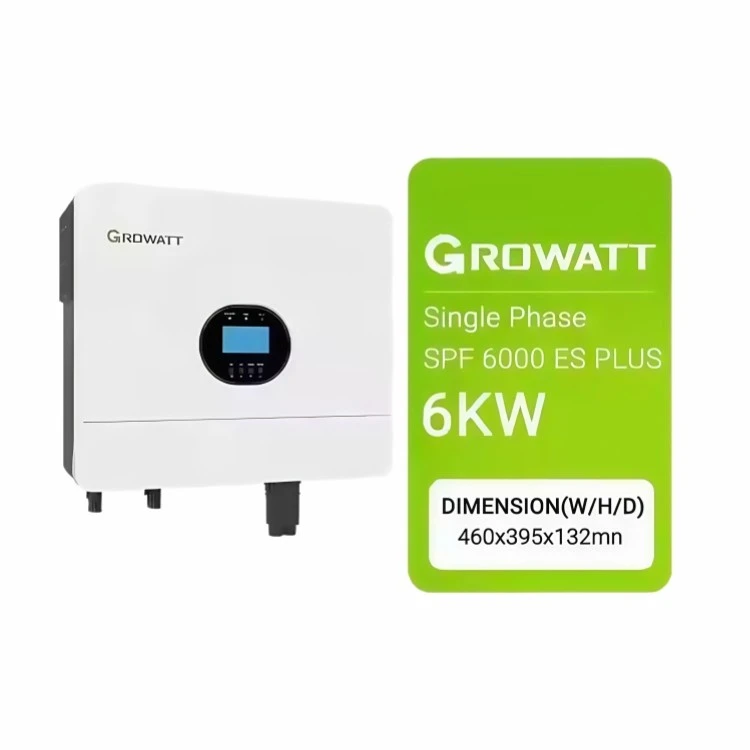
- If you have a larger off - grid system with a capacity of 6kW, the Growatt Off Grid 6Kw/48V SPF 6000 ES Plus Inverter is an excellent choice. It has a high - power output and is designed to work efficiently in off - grid scenarios.
Importance of Correct Sizing
Choosing the right size solar inverter is crucial for several reasons:
- Efficiency
A properly sized inverter ensures that your solar panels operate at their maximum efficiency. If the inverter is too small, it can't handle the full power output of the solar panels, leading to wasted energy. Conversely, an oversized inverter may operate at low loads, which can also reduce efficiency. - System Lifespan
An appropriately sized inverter is less likely to be overloaded, which can extend its lifespan. Overloading an inverter can cause it to overheat and fail prematurely, resulting in costly repairs or replacements. - Cost - Effectiveness
By choosing the right size inverter, you can avoid unnecessary expenses. Oversizing the inverter means paying more for a higher - capacity unit than you actually need, while undersizing can lead to reduced energy production and potential system failures.
Contact Us for Your Solar Inverter Needs
If you're still unsure about what size solar inverter you need for your specific situation, don't hesitate to contact us. Our team of experts can help you assess your solar panel system, load requirements, and other factors to recommend the most suitable inverter for you. We offer a wide range of high - quality solar inverters at competitive prices, and we're committed to providing excellent customer service. Whether you're a homeowner looking to install a small solar system or a business owner planning a large - scale solar project, we have the solutions for you.
References
- "Solar Power for Dummies" by Rik DeGunther
- "Renewable Energy Systems and Applications" by John Twidell and Tony Weir
- Industry reports from the Solar Energy Industries Association (SEIA)