

Hey there! As a current sensor supplier, I often get asked about the shock and vibration resistance of current sensors. It's a crucial aspect, especially for applications where the sensors are exposed to rough environments. So, let's dive right in and explore what shock and vibration resistance means for a current sensor.
First off, what do we mean by shock and vibration? Shock refers to a sudden and intense force applied to the sensor. This could happen when the equipment housing the sensor is dropped, bumped, or experiences a rapid impact. Vibration, on the other hand, is a continuous, oscillating movement. It can come from things like motors, engines, or even the natural movement of a vehicle.
Now, why is shock and vibration resistance so important for current sensors? Well, current sensors are used in a wide range of applications, from industrial machinery to automotive systems. In these environments, they can be subjected to all sorts of mechanical stresses. If a sensor isn't resistant to shock and vibration, it can lead to inaccurate readings, premature failure, or even complete breakdown.
Let's take a look at how shock and vibration can affect a current sensor. When a sensor experiences a shock, the internal components can be displaced. This can cause misalignments in the magnetic circuits, which are crucial for accurate current measurement. In some cases, the shock can even damage the delicate electronic components, rendering the sensor useless.
Vibration can also have a detrimental effect. Over time, continuous vibration can cause fatigue in the sensor's components. This can lead to cracks in the circuit boards, loose connections, or wear and tear on the mechanical parts. As a result, the sensor's performance can degrade, and its lifespan can be significantly reduced.
So, how do we measure the shock and vibration resistance of a current sensor? Manufacturers typically use standardized tests to evaluate these properties. For shock resistance, the sensor is subjected to a series of high - intensity impacts at different angles and magnitudes. The sensor's performance is then monitored before and after the shock tests to ensure that it still functions correctly.
Vibration resistance is tested by subjecting the sensor to a range of frequencies and amplitudes of vibration. The sensor is usually tested for a specific period, and its output is continuously monitored. If the sensor can maintain its accuracy and functionality throughout the test, it is considered to have good vibration resistance.
At our company, we take shock and vibration resistance very seriously. We design our current sensors to withstand the toughest conditions. We use high - quality materials and advanced manufacturing techniques to ensure that our sensors are robust and reliable.
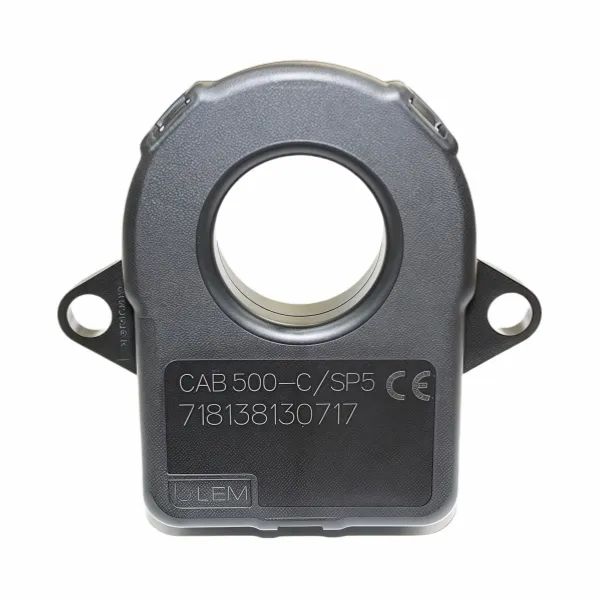
For example, we have the LEM CAB500C 12V CAB500 Current Sensor. This sensor is built to handle both shock and vibration. It has a rugged construction that can withstand impacts and continuous movement. Whether it's used in a heavy - duty industrial machine or a high - performance automotive application, you can count on it to provide accurate and stable current measurements.
When choosing a current sensor, it's important to consider the shock and vibration requirements of your application. If your equipment is likely to experience a lot of movement or impacts, you'll need a sensor with high shock and vibration resistance. On the other hand, if the environment is relatively stable, you may be able to get away with a less rugged sensor.
Another factor to consider is the cost. Sensors with higher shock and vibration resistance often come at a higher price. However, it's important to weigh the cost against the potential savings in terms of reduced downtime, fewer replacements, and more accurate measurements.
In addition to the physical design, we also use advanced signal processing algorithms in our sensors. These algorithms can help to filter out any noise or interference caused by shock and vibration. This means that even if the sensor is subjected to some level of mechanical stress, it can still provide accurate and reliable readings.
We also offer customization options for our current sensors. If you have specific shock and vibration requirements for your application, we can work with you to design a sensor that meets your needs. Whether it's adjusting the mechanical design, using different materials, or optimizing the signal processing algorithms, we'll do our best to provide you with a solution that works.

So, if you're in the market for a current sensor and you're concerned about shock and vibration resistance, don't hesitate to get in touch with us. We have a team of experts who can help you choose the right sensor for your application. We can also provide you with detailed technical information and support to ensure that you get the most out of your sensor.
In conclusion, shock and vibration resistance is a critical factor when it comes to current sensors. It can have a significant impact on the sensor's performance, reliability, and lifespan. By choosing a high - quality sensor with good shock and vibration resistance, you can ensure that your equipment operates smoothly and accurately.
If you're interested in learning more about our current sensors or have any questions about shock and vibration resistance, feel free to reach out to us. We're here to help you find the best solution for your needs.
References:
- Industry standards for shock and vibration testing of electronic components
- Technical documentation of current sensors from leading manufacturers