

The self - discharge rate of battery modules is a crucial parameter that significantly impacts their performance, storage, and overall usability. As a battery modules supplier, understanding and communicating this concept to our clients is of utmost importance.
What is Self - Discharge?
Self - discharge is a natural phenomenon that occurs in all battery types. It refers to the gradual loss of charge in a battery when it is not in use or connected to a circuit. Even when a battery module is sitting idle on a shelf, its chemical reactions continue at a slow pace, causing it to lose energy over time. This loss of charge is measured as a percentage of the battery's initial capacity per unit of time, usually expressed as a percentage per month or year.
Factors Affecting the Self - Discharge Rate
1. Battery Chemistry
Different battery chemistries have different self - discharge rates. For example, lithium - ion batteries, which are widely used in various applications, generally have a relatively low self - discharge rate compared to other battery types. Lithium iron phosphate (LiFePO4) batteries, a type of lithium - ion battery, are known for their stability and low self - discharge. Our DIY 8S1P 25.6V 100Ah LiFePO4 Battery Module and 12V/100Ah for Solar and EV LiFePO4 Battery fall into this category. LiFePO4 batteries typically have a self - discharge rate of around 1 - 3% per month.
On the other hand, nickel - metal hydride (NiMH) batteries have a higher self - discharge rate, often around 10 - 20% per month. Nickel - cadmium (NiCd) batteries also have a relatively high self - discharge, and they can experience a "memory effect" which can further complicate their performance over time.
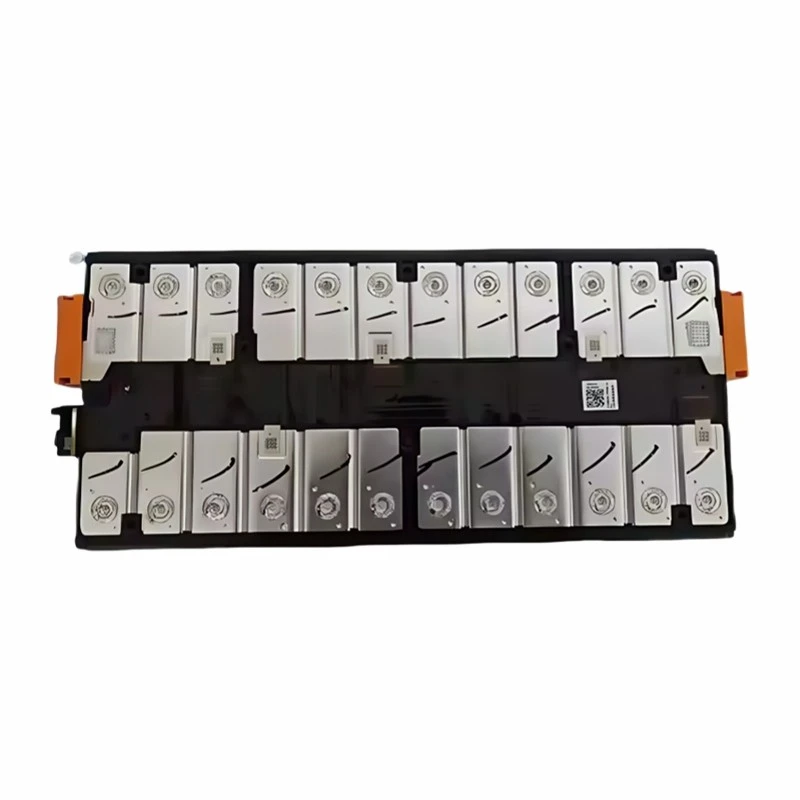
Cobalt - based lithium - ion batteries, such as nickel - cobalt - manganese (NCM) batteries, are commonly used in electric vehicles (EVs) and hybrid electric vehicles (HEVs). Our 1P12S 44.4V 139Ah NCM Battery Module for EV and HEV has a self - discharge rate that can vary depending on the specific formulation, but it is generally in the range of 2 - 5% per month.
2. Temperature
Temperature has a significant impact on the self - discharge rate of battery modules. Higher temperatures accelerate the chemical reactions within the battery, leading to an increased self - discharge rate. Conversely, lower temperatures slow down these reactions, reducing the self - discharge. For example, if a LiFePO4 battery has a self - discharge rate of 1% per month at room temperature (around 25°C), the rate can increase to 3 - 5% per month at 40°C. Storing battery modules in a cool environment can help minimize self - discharge and preserve their charge for longer periods.
3. State of Charge (SOC)
The state of charge of a battery also affects its self - discharge rate. Batteries that are fully charged generally have a higher self - discharge rate than those that are partially charged. This is because the high potential difference between the electrodes in a fully charged battery drives the chemical reactions more vigorously. It is often recommended to store batteries at a partially charged state (around 40 - 60% SOC) to reduce self - discharge.
4. Battery Age and Quality
As batteries age, their internal resistance increases, and their self - discharge rate tends to go up. This is due to the degradation of the electrode materials and the electrolyte over time. Additionally, the quality of the battery manufacturing process plays a role. High - quality battery modules with better - controlled manufacturing processes and higher - quality materials typically have lower self - discharge rates.

Implications of Self - Discharge for Battery Modules
1. Storage
When it comes to storing battery modules, the self - discharge rate is a critical factor. If a battery has a high self - discharge rate, it will lose its charge quickly during storage. This means that if the battery is not recharged regularly, it may not be ready for use when needed. For example, if a solar energy storage system uses battery modules with a high self - discharge rate, the stored energy can be depleted over time, reducing the system's efficiency.
2. Shelf Life
The self - discharge rate also affects the shelf life of battery modules. A battery with a low self - discharge rate can be stored for a longer time without significant loss of capacity. This is important for suppliers and customers who need to stock battery modules for future use. Our LiFePO4 battery modules, with their low self - discharge rates, have a longer shelf life, making them a good choice for long - term storage applications.
3. Performance in Devices
In devices that are used intermittently, a high self - discharge rate can be a problem. For example, in a remote - controlled device or a backup power supply, the battery may lose its charge while sitting idle, resulting in reduced performance when the device is turned on. Using battery modules with a low self - discharge rate can help ensure that the device is ready for use at all times.
Measuring the Self - Discharge Rate
Measuring the self - discharge rate of battery modules requires careful testing. Typically, a battery is fully charged and then stored in a controlled environment (temperature and humidity are carefully monitored). The battery's state of charge is measured at regular intervals (e.g., once a week or once a month). The difference in the state of charge over time is used to calculate the self - discharge rate.
At our company, we conduct rigorous testing on all our battery modules to determine their self - discharge rates accurately. This allows us to provide our customers with reliable information about the performance of our products.
Managing Self - Discharge
There are several ways to manage the self - discharge of battery modules. One approach is to use a battery management system (BMS). A BMS can monitor the state of charge of the battery and perform functions such as balancing the cells in the module and preventing over - discharge. This helps to extend the battery's life and reduce the impact of self - discharge.
Another way is to store the battery modules in a cool and dry environment. As mentioned earlier, lower temperatures slow down the self - discharge process. Additionally, keeping the batteries at a partially charged state during storage can also help reduce self - discharge.
Conclusion
The self - discharge rate of battery modules is a complex but important concept. As a battery modules supplier, we are committed to providing our customers with high - quality products with low self - discharge rates. Our DIY 8S1P 25.6V 100Ah LiFePO4 Battery Module, 1P12S 44.4V 139Ah NCM Battery Module for EV and HEV, and 12V/100Ah for Solar and EV LiFePO4 Battery are designed to offer optimal performance in terms of self - discharge and other key parameters.
If you are in the market for battery modules and want to learn more about our products, we welcome you to reach out to us for procurement and discussion. We are here to provide you with the best solutions for your battery needs.
References
- Linden, David, and Thomas B. Reddy. Handbook of Batteries. McGraw - Hill Education, 2011.
- Schmidt, Rüdiger, et al. Lithium - Ion Batteries: Basics, Progress, and Applications. Springer International Publishing, 2017.