

Hey there! As a supplier of 3.67V 78Ah NCM Lithium Ion Batteries, I often get asked about the open - circuit voltage of a fully - charged battery. So, I thought I'd write this blog to share some insights on this topic.
First off, let's understand what open - circuit voltage is. In simple terms, open - circuit voltage (OCV) is the voltage of a battery when it's not connected to any load. That means there's no current flowing in or out of the battery. It's like taking a battery out of a device and just measuring the voltage across its terminals.
Now, for a fully - charged 3.67V 78Ah NCM lithium - ion battery, the open - circuit voltage can vary a bit, but it's typically around 4.2V. Yeah, you heard that right! Even though the nominal voltage of our 3.67V 78Ah NCM Lithium Ion Battery is 3.67V, when it's fully charged, the OCV goes up to about 4.2V.
Why the difference between nominal voltage and fully - charged OCV? Well, the nominal voltage is kind of an average voltage that the battery operates at during most of its discharge cycle. It gives you a general idea of the battery's voltage level. But when you charge a lithium - ion battery, the voltage increases as the battery stores more energy. And once it's fully charged, the voltage peaks at around 4.2V.

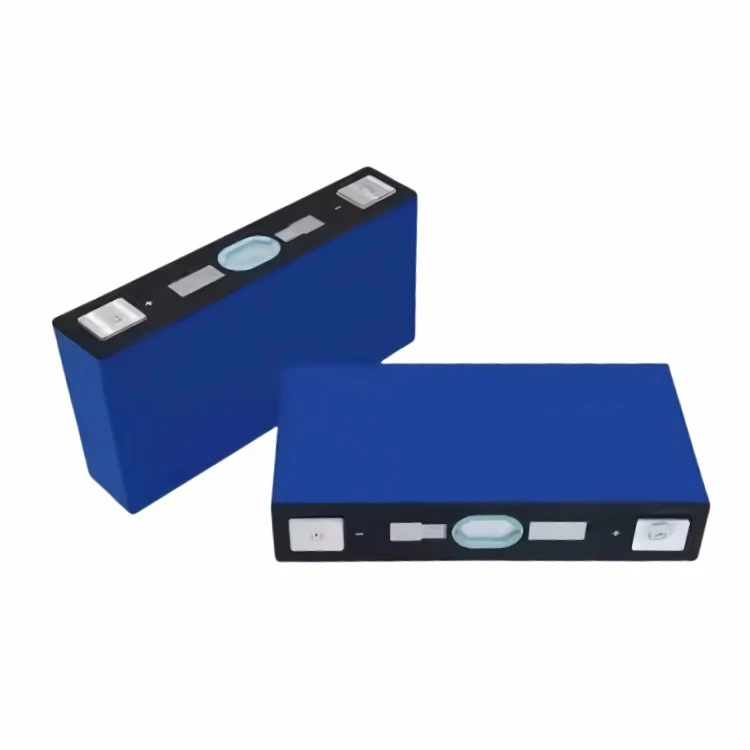
There are a few factors that can affect the open - circuit voltage of a fully - charged NCM lithium - ion battery. One of the main factors is the state of charge (SOC). As I mentioned, when the battery is fully charged (100% SOC), the OCV is around 4.2V. But if the battery is only partially charged, say 50% SOC, the OCV will be lower, maybe around 3.7 - 3.8V.
Temperature also plays a role. In colder temperatures, the chemical reactions inside the battery slow down, and the OCV might be a bit lower than normal. On the other hand, in warmer temperatures, the reactions speed up, and the OCV could be slightly higher. But these temperature - related changes are usually small.
Another factor is the age and condition of the battery. As a battery gets older and goes through more charge - discharge cycles, its performance degrades. This can lead to a lower open - circuit voltage even when it's supposed to be fully charged.
Let's talk a bit about the importance of knowing the open - circuit voltage. For us battery suppliers, it's crucial for quality control. We measure the OCV of our batteries to make sure they're being charged correctly and that they're in good working condition. If the OCV of a fully - charged battery is significantly lower than 4.2V, it could indicate a problem, like a faulty cell or an issue with the charging process.
For end - users, knowing the OCV can help in determining the state of charge of the battery. By measuring the OCV, you can get a rough estimate of how much energy is left in the battery. It's not as accurate as using a dedicated battery management system (BMS), but it can give you a ballpark figure.
Now, I want to mention some of our other great products. We also offer a 3.7V 147Ah NCM Lithium Ion Battery. This battery has a higher capacity, which makes it suitable for applications that require more energy, like electric vehicles or large - scale energy storage systems.
And then there's our Prismatic 3.65V 55Ah NCM Lithium Ion Battery Cell. The prismatic design gives it a more compact and flat shape, which is great for applications where space is limited, like in some consumer electronics or small - scale power backup systems.
If you're in the market for high - quality NCM lithium - ion batteries, whether it's our 3.67V 78Ah battery or any of our other products, we'd love to hear from you. We can provide you with detailed product specifications, pricing, and answer any questions you might have. Just reach out to us, and we'll start the conversation about how we can meet your battery needs.
In conclusion, the open - circuit voltage of a fully - charged 3.67V 78Ah NCM lithium - ion battery is typically around 4.2V. But it can be affected by factors like state of charge, temperature, and the age of the battery. Knowing the OCV is important for both suppliers and end - users. And if you're looking for reliable NCM lithium - ion batteries, we're here to help.
References
- Linden, D., & Reddy, T. B. (2002). Handbook of Batteries (3rd ed.). McGraw - Hill.
- Tarascon, J. M., & Armand, M. (2001). Issues and challenges facing rechargeable lithium batteries. Nature, 414(6861), 359 - 367.