

Hey there! As a current sensor supplier, I often get asked about various technical aspects of our products. One question that pops up quite a bit is, "What is the insulation resistance of a current sensor?" Today, I'm gonna break it down for you in a way that's easy to understand.
First off, let's talk about what insulation resistance actually means. In simple terms, insulation resistance is a measure of how well the insulation material in a device can prevent the flow of electric current. You can think of it like a barrier that stops electricity from going where it's not supposed to. In a current sensor, this is super important because it helps ensure accurate measurements and keeps the sensor safe to use.
Now, why does insulation resistance matter in a current sensor? Well, if the insulation resistance is too low, it can lead to leakage currents. These leakage currents can mess up the sensor's readings, making them inaccurate. And in some cases, they can even pose a safety risk, especially in high - voltage applications. On the other hand, a high insulation resistance means that the sensor is better at keeping the current where it should be and providing reliable measurements.
Let's take a look at how insulation resistance is measured. Usually, it's measured using a special instrument called a megohmmeter, also known as a megger. This device applies a high - voltage DC signal to the insulation and measures the resulting current. By using Ohm's law (R = V/I, where R is resistance, V is voltage, and I is current), the insulation resistance can be calculated.

The value of insulation resistance can vary depending on several factors. One of the main factors is the type of insulation material used in the current sensor. Different materials have different insulating properties. For example, some sensors might use ceramic insulation, which generally has a high insulation resistance. Others might use plastic or rubber insulation, and the resistance values can be different.
The temperature and humidity also play a big role. As the temperature goes up, the insulation resistance tends to go down. This is because higher temperatures can cause the insulation material to become more conductive. Similarly, high humidity can also reduce the insulation resistance, as moisture can provide a path for the current to leak through.
Another factor is the age and condition of the sensor. Over time, the insulation material can degrade due to factors like heat, mechanical stress, and chemical exposure. This degradation can lead to a decrease in insulation resistance. So, it's important to regularly check the insulation resistance of your current sensors to make sure they're still working properly.
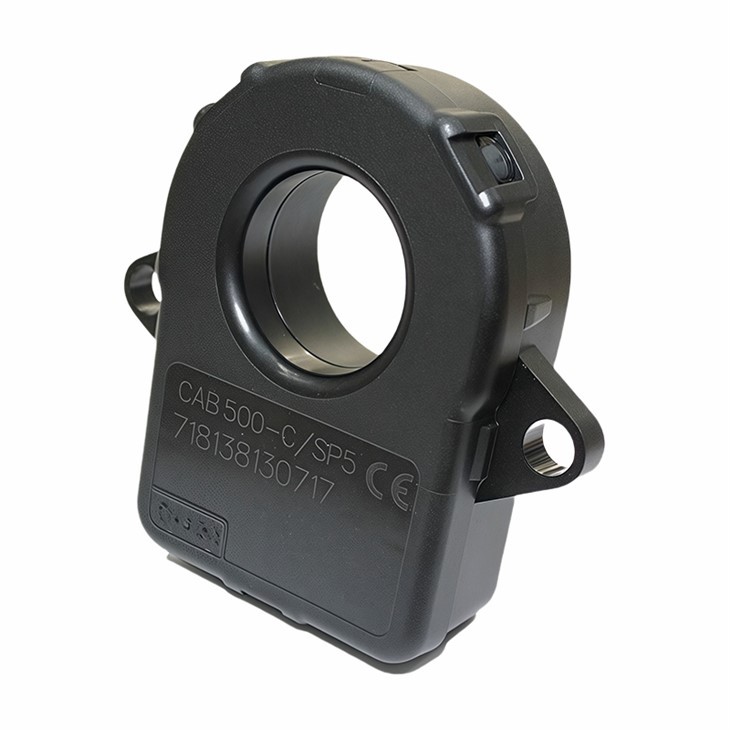
Now, let me give you an example of a current sensor that has good insulation resistance. Check out the LEM CAB500C 12V CAB500 Current Sensor. This sensor is designed with high - quality insulation materials to ensure a high insulation resistance. It's suitable for a wide range of applications, from battery management systems to industrial power monitoring.
In battery management systems, accurate current measurement is crucial. The high insulation resistance of the LEM CAB500C helps prevent leakage currents, which in turn ensures that the battery charge and discharge measurements are accurate. This is important for optimizing the battery's performance and extending its lifespan.
In industrial power monitoring, the sensor's insulation resistance helps protect the monitoring equipment from electrical interference. It ensures that the current measurements are reliable, which is essential for maintaining the safety and efficiency of the industrial processes.
When you're choosing a current sensor, it's important to consider the insulation resistance requirements of your application. If you're working in a high - voltage environment, you'll need a sensor with a very high insulation resistance. On the other hand, if you're in a low - voltage application, the requirements might not be as strict.
As a current sensor supplier, we understand the importance of insulation resistance. That's why we carefully select the materials and manufacturing processes for our sensors to ensure that they meet the highest standards. We also provide detailed technical specifications for each of our sensors, including the insulation resistance values, so you can make an informed decision.
If you're in the market for a current sensor and have questions about insulation resistance or any other technical aspect, don't hesitate to reach out. We're here to help you find the right sensor for your needs. Whether you're a small - scale electronics hobbyist or a large - scale industrial manufacturer, we've got the products and expertise to support you.
In conclusion, insulation resistance is a critical parameter for current sensors. It affects the accuracy of the measurements and the safety of the sensor. By understanding the factors that influence insulation resistance and choosing the right sensor for your application, you can ensure that your current sensing system works reliably.
So, if you're interested in learning more about our current sensors or want to discuss your specific requirements, just drop us a line. We're looking forward to working with you and helping you find the perfect current sensor solution.
References:
- Electrical Engineering textbooks on insulation materials and measurement techniques
- Technical documentation of current sensors from various manufacturers