

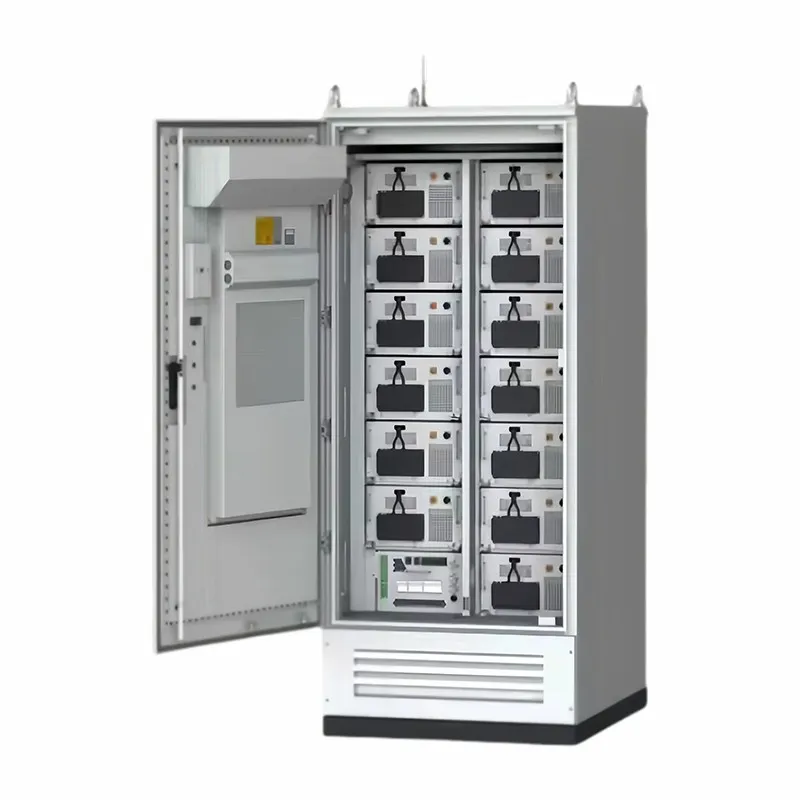
As a supplier of the 100KW 174KWh Smart All-in-one ESS, I often get asked about the efficiency of the inverter in this system. In this blog post, I'll delve into the details of inverter efficiency within our 100KW 174KWh Smart All-in-one ESS, exploring what it means, how it's measured, and why it matters.
Understanding Inverter Efficiency
Before we dive into the specifics of our ESS, let's first understand what inverter efficiency is. An inverter is a crucial component in an energy storage system (ESS) that converts direct current (DC) from the battery into alternating current (AC) that can be used to power electrical devices or fed back into the grid. Inverter efficiency refers to the ratio of the AC power output to the DC power input, expressed as a percentage.
Mathematically, inverter efficiency ((\eta)) is calculated using the formula:
(\eta=\frac{P_{AC}}{P_{DC}}\times100%)
where (P_{AC}) is the AC power output and (P_{DC}) is the DC power input.
A higher inverter efficiency means less energy is lost during the conversion process, resulting in more of the stored energy being available for use. This is particularly important in large-scale ESS like our 100KW 174KWh Smart All-in-one ESS, where even a small increase in efficiency can lead to significant savings over time.
Inverter Efficiency in the 100KW 174KWh Smart All-in-one ESS
Our 100KW 174KWh Smart All-in-one ESS is designed with a high-efficiency inverter to ensure optimal performance. The inverter in our system is engineered to achieve an efficiency of up to 97% under typical operating conditions. This means that for every 100 kilowatt-hours (kWh) of DC power input from the battery, up to 97 kWh of AC power is output, with only 3 kWh lost as heat during the conversion process.
The high efficiency of our inverter is achieved through several advanced design features. Firstly, we use state-of-the-art semiconductor materials and advanced circuit topologies to minimize power losses. These technologies reduce the resistance and switching losses within the inverter, allowing for more efficient energy conversion.
Secondly, our inverter is equipped with intelligent control algorithms that continuously monitor and adjust the operating parameters to optimize efficiency. These algorithms take into account factors such as the battery state of charge, load demand, and grid conditions to ensure that the inverter operates at its peak efficiency at all times.
Measuring Inverter Efficiency
To accurately measure the efficiency of the inverter in our 100KW 174KWh Smart All-in-one ESS, we follow strict testing procedures in accordance with international standards. During the testing process, we use precision power meters to measure the DC power input from the battery and the AC power output of the inverter under various operating conditions.
We also conduct tests at different load levels to evaluate the inverter's efficiency across its entire operating range. This is important because inverter efficiency can vary depending on the load. For example, an inverter may operate at its highest efficiency at a specific load level, and its efficiency may decrease at lower or higher loads.
By conducting comprehensive testing, we can ensure that our inverter meets or exceeds the specified efficiency ratings and performs reliably in real-world applications.
Why Inverter Efficiency Matters
The efficiency of the inverter in an ESS has several important implications for both the end-user and the environment.
Cost Savings
A high-efficiency inverter means less energy is wasted during the conversion process, resulting in lower electricity bills for the end-user. In a large-scale ESS like our 100KW 174KWh Smart All-in-one ESS, the savings can be substantial over the lifetime of the system.
System Performance
Efficient energy conversion also improves the overall performance of the ESS. With less energy lost as heat, the inverter operates at a lower temperature, which reduces the risk of overheating and extends the lifespan of the components. This leads to a more reliable and durable ESS that requires less maintenance.
Environmental Impact
By reducing energy waste, a high-efficiency inverter helps to minimize the environmental impact of the ESS. Less energy consumption means fewer greenhouse gas emissions, contributing to a more sustainable energy future.
Comparison with Other ESS
To put the efficiency of our inverter in perspective, let's compare it with other similar ESS on the market. For example, the LiFePO4 ESS 160kWh Air Cooling Energy Storage System has an inverter efficiency of around 95%. While this is still a respectable efficiency rating, our 100KW 174KWh Smart All-in-one ESS offers a higher efficiency of up to 97%, which translates to even greater energy savings and performance benefits.
Another factor to consider is the battery technology used in the ESS. Our 100KW 174KWh Smart All-in-one ESS uses 12V/230Ah 12.8V/230Ah LiFePO4 Storage Battery, which has a high energy density and long cycle life. When combined with a high-efficiency inverter, the overall performance of the ESS is significantly enhanced.
Conclusion
In conclusion, the efficiency of the inverter in our 100KW 174KWh Smart All-in-one ESS is a critical factor in its performance and cost-effectiveness. With an efficiency of up to 97%, our inverter ensures that more of the stored energy is available for use, resulting in lower electricity bills, improved system performance, and a reduced environmental impact.
If you're interested in learning more about our 100KW 174KWh Smart All-in-one ESS or have any questions about inverter efficiency, please don't hesitate to contact us. We're always happy to discuss your energy storage needs and provide you with the information you need to make an informed decision.

References
- International Electrotechnical Commission (IEC) standards for inverter testing
- Technical specifications of the 100KW 174KWh Smart All-in-one ESS
- Research papers on high-efficiency inverter design and control algorithms