

Hey there! As a supplier of 72V 100Ah marine batteries, I often get asked about the efficiency of these power - packed units. So, let's dive right in and explore what makes these batteries tick and how efficient they really are.
First off, let's understand what we mean by "efficiency" when it comes to a marine battery. In simple terms, battery efficiency refers to how well a battery can convert stored energy into usable electrical power. It's usually expressed as a percentage, and the higher the percentage, the more effectively the battery is performing.
Key Factors Affecting Battery Efficiency
1. Chemistry
Our 72V 100Ah marine batteries are typically based on advanced lithium - ion technology, specifically LiFePO4 (Lithium Iron Phosphate). This chemistry is a game - changer in the marine battery world. Unlike traditional lead - acid batteries, LiFePO4 batteries have a much higher charge and discharge efficiency. Lead - acid batteries can lose a significant amount of energy as heat during charging and discharging processes. In contrast, LiFePO4 batteries can have charge efficiencies of up to 95 - 98%. This means that almost all of the energy you put into charging the battery is stored and can be used later.
2. Discharge Rate
The rate at which you discharge a battery also impacts its efficiency. For our 72V 100Ah marine batteries, they are designed to handle different discharge rates. At a moderate discharge rate, say around 0.2C (where C is the battery's capacity, so 0.2C for a 100Ah battery is 20A), the battery can maintain a high level of efficiency. However, if you try to discharge the battery at a very high rate, like 2C or more, the efficiency may drop slightly. This is because high - rate discharges can cause internal resistance to increase, leading to more energy being lost as heat.
3. Temperature
Temperature plays a crucial role in battery efficiency. Our marine batteries are engineered to perform well in a wide range of temperatures. But generally, the ideal temperature range for maximum efficiency is between 20 - 30°C (68 - 86°F). When the temperature drops below this range, the battery's internal resistance increases, which can reduce the efficiency of both charging and discharging. On the other hand, extremely high temperatures can also be detrimental, as they can accelerate the degradation of the battery's components and reduce its overall lifespan.
Calculating the Efficiency of a 72V 100Ah Marine Battery
To calculate the energy stored in our 72V 100Ah marine battery, we use the formula: Energy (in watt - hours) = Voltage (V) x Capacity (Ah). So, for a 72V 100Ah battery, the total stored energy is 72V x 100Ah = 7200 Wh.
However, when we talk about efficiency, we need to consider the energy losses during charging and discharging. Let's assume a charge efficiency of 95% and a discharge efficiency of 95% (which are reasonable estimates for our LiFePO4 batteries).
During charging, if we input 7200 Wh of energy, due to the 95% charge efficiency, the actual energy stored in the battery is 7200 Wh x 0.95 = 6840 Wh.
When it comes to discharging, if we start with the 6840 Wh of stored energy, with a 95% discharge efficiency, the amount of usable energy we get out is 6840 Wh x 0.95 = 6498 Wh.
So, overall, the combined efficiency of charging and discharging is (6498 Wh / 7200 Wh) x 100% ≈ 90.25%. This means that we can expect to use about 90.25% of the energy we put into the battery, which is pretty impressive!
Comparing with Other Marine Batteries
Now, let's compare our 72V 100Ah marine battery with some other options in the market.
If you look at a 24V 90Ah LiFePO4 Battery with RS485, it has a lower voltage and capacity. The total stored energy in this battery is 24V x 90Ah = 2160 Wh. While it may have similar charge and discharge efficiencies as our 72V 100Ah battery, due to its lower capacity, it may not be suitable for larger marine applications that require a lot of power.
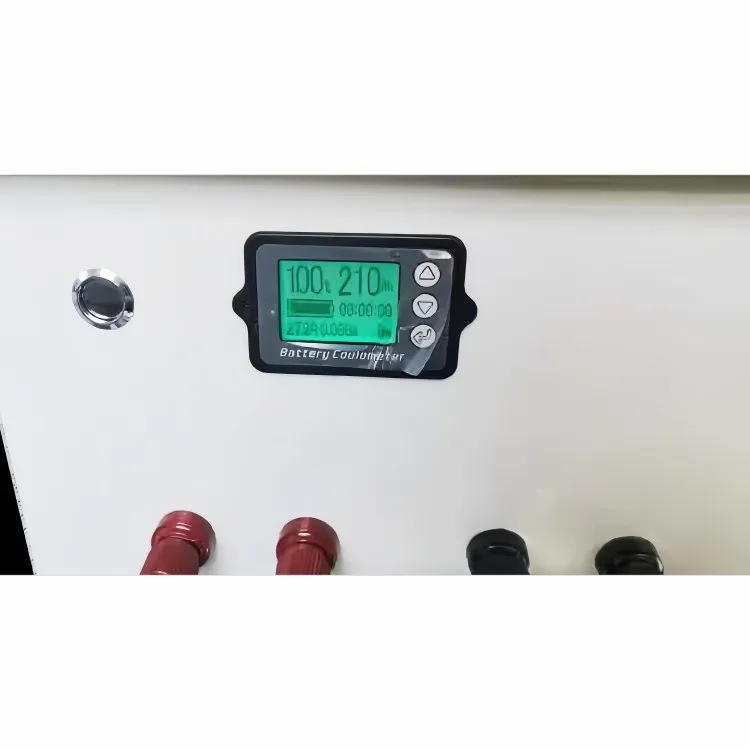
On the other hand, a 25.6V 210Ah Lithium Battery Pack for Electric Boats has a different voltage and capacity combination. Its total stored energy is 25.6V x 210Ah = 5376 Wh. Again, depending on your specific power requirements, our 72V 100Ah battery may be a better choice in terms of providing a higher amount of usable energy.

Benefits of High - Efficiency Marine Batteries
1. Longer Run Times
Since our 72V 100Ah marine batteries are highly efficient, they can provide longer run times for your marine equipment. Whether you're powering an electric motor, a navigation system, or other onboard electronics, you can rely on these batteries to keep your devices running for extended periods without the need for frequent recharging.
2. Reduced Energy Costs
With high - efficiency batteries, you can make the most of the energy you consume. This means that you'll need to use less electricity to charge the battery, which can lead to significant cost savings over time, especially if you're using your boat frequently.
3. Environmental Friendliness
Using efficient batteries also has environmental benefits. Since they waste less energy in the form of heat, they have a lower carbon footprint compared to less efficient battery options. This is an important consideration for those who are conscious about protecting the marine environment.
Why Choose Our 72V 100Ah Marine Battery
As a supplier, we take pride in offering high - quality 72V 100Ah marine batteries. Our batteries are not only efficient but also built to last. They are designed with advanced safety features to prevent overcharging, over - discharging, and short - circuits.
If you're in the market for a reliable and efficient marine battery, our 72V 100Ah Marine Battery is definitely worth considering. Whether you're a professional mariner or a recreational boater, our batteries can meet your power needs.
Contact for Procurement
If you're interested in learning more about our 72V 100Ah marine batteries or would like to discuss a potential purchase, don't hesitate to reach out. We're here to answer all your questions and help you find the best battery solution for your marine applications.
References
- Battery University: A comprehensive resource for battery technology and efficiency information.
- Marine Electrical Systems Handbook: Provides in - depth knowledge about marine battery systems and their performance.