

Hey there! As a connector supplier, I often get asked about the difference between a plug and a socket connector. It might seem like a simple question, but there's actually quite a bit to unpack. So, let's dive right in and explore the ins and outs of these two essential components in the world of electronics and power systems.
What's a Plug Connector?
A plug connector is like the "male" part of the connection equation. It's designed to be inserted into a complementary socket. You've probably seen plugs on all sorts of devices, from your phone charger to your laptop. These little guys are built to carry electrical current or signals from one place to another.
One cool thing about plugs is their portability. Since they're usually attached to the device or cable that you're using, you can easily move them around and connect them to different sockets as needed. For example, if you're traveling and need to charge your phone in a hotel room, you just take your phone charger (which has a plug) and find a suitable socket.
Plugs come in all shapes and sizes, depending on their intended use. Some are small and delicate, like the ones on earphones, while others are big and beefy, like the plugs used for heavy-duty industrial equipment. The size and shape of a plug are also determined by safety standards and compatibility requirements. These rules are in place to make sure that the plug fits properly into the socket and that there's no risk of electrical shock or short circuits.
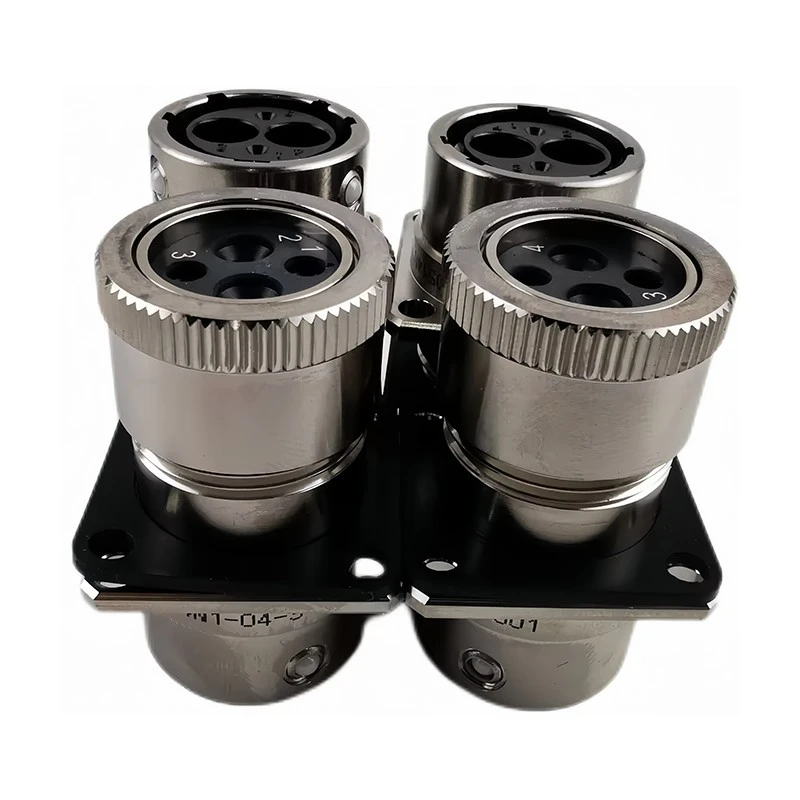

What's a Socket Connector?
A socket connector, on the other hand, is the "female" part. It's the stationary component that sits on a wall, a device, or a power strip, waiting for a plug to be inserted. Sockets are where the magic happens because they provide the interface that allows power or signals to flow into the plug and, ultimately, to the device it's connected to.
Sockets are usually more permanent fixtures than plugs. They're installed in a specific location and are designed to be used again and again. For example, the electrical sockets in your home are wired into the electrical system and are there to stay. They're built to be durable and reliable, able to withstand repeated plugging and unplugging over time.
Just like plugs, sockets also come in different shapes and sizes. The most common type of socket you'll see in your home is the standard electrical outlet, which has two or three slots for the prongs of a plug. But there are also specialized sockets for different applications, such as audio sockets, USB sockets, and high-voltage sockets used in industrial settings.
Key Differences between Plugs and Socket Connectors
Physical Design
The most obvious difference between plugs and sockets is their physical design. Plugs have protruding pins or prongs that are meant to fit into the corresponding holes or slots in a socket. Sockets, on the other hand, have recessed holes or slots that are designed to receive the pins or prongs of a plug. This difference in design is what allows them to connect and disconnect easily.
Function
Another important difference is their function. Plugs are responsible for carrying electrical current or signals from a source (like a power supply or a data cable) to a device. Sockets, on the other hand, are responsible for providing the connection point where the plug can be inserted and the electrical current or signals can flow. In other words, plugs are the "transmitters," and sockets are the "receivers."
Installation and Usage
Plugs are typically attached to a device or a cable, which means they're easy to move around and use in different locations. Sockets, on the other hand, are usually installed in a fixed location, such as a wall or a device. This makes them more suitable for providing a stable and permanent connection point.
Safety Features
Both plugs and sockets often have safety features built into them to prevent electrical accidents. For example, many plugs have insulated prongs to reduce the risk of electrical shock. Sockets may have features like shutters that prevent foreign objects from being inserted into the slots, or grounding pins to protect against electrical surges.
Our Connector Products
As a connector supplier, we offer a wide range of high-quality plug and socket connectors to meet the needs of different customers. One of our popular products is the PEC200 1500V 200A Energy Storage Battery System Connector Socket. This socket is designed for use in energy storage battery systems and can handle high voltages and currents. It's built to be durable and reliable, ensuring a secure connection for your battery system.
We also have the JONHON C10514N1-04-4-1 Metal Connector and the JONHON C10514N1-04-3-1 G001 Metal Connector. These metal connectors are suitable for a variety of applications, including industrial equipment and automotive electronics. They're made from high-quality materials and are designed to provide a strong and stable connection.
Why Choose Our Connectors?
- Quality: We use only the best materials and manufacturing processes to ensure that our connectors meet the highest standards of quality and reliability.
- Compatibility: Our connectors are designed to be compatible with a wide range of devices and systems, making them a versatile choice for different applications.
- Safety: We take safety seriously and incorporate a variety of safety features into our connectors to protect you and your equipment.
- Customer Service: Our team of experts is always ready to help you find the right connector for your needs. We provide excellent customer service and support to ensure your satisfaction.
Contact Us for Procurement
If you're in the market for high-quality plug and socket connectors, we'd love to hear from you. Whether you're a small business or a large corporation, we can provide you with the connectors you need at competitive prices. Just get in touch, and we'll work with you to find the best solutions for your requirements.
References
- "Electrical Connectors Handbook." McGraw-Hill Professional.
- "Connectors for Electronic Applications." John Wiley & Sons.