

Hey there! As a current sensor supplier, I often get asked about how to measure the DC offset of a current sensor. It's a crucial aspect of ensuring the accuracy and reliability of these sensors, so I thought I'd share some insights on this topic.
First off, let's quickly understand what DC offset is. In a current sensor, DC offset refers to the output voltage or current that the sensor produces when there's actually zero input current. Ideally, when there's no current flowing through the sensor, the output should be zero. But in reality, due to various factors like component tolerances, magnetic interference, and temperature variations, there's usually a small non - zero output, which is the DC offset.
Now, why is measuring the DC offset important? Well, if you're using a current sensor in applications like battery management systems, power monitoring, or electric vehicle drivetrains, even a small DC offset can lead to significant errors in your measurements. For example, in a battery management system, an inaccurate current measurement due to DC offset can result in incorrect state - of - charge calculations, which can ultimately affect the performance and lifespan of the battery.
So, how do we measure the DC offset of a current sensor? There are a few methods, and I'll go through each of them.
Method 1: Using a Multimeter
This is the simplest and most straightforward method. All you need is a good quality multimeter. Here's how you do it:
- Isolate the Sensor: Make sure that there is absolutely no current flowing through the current sensor. You can do this by disconnecting the power source or using a switch to open the circuit.
- Set up the Multimeter: Set your multimeter to measure DC voltage or current, depending on the output type of your current sensor. Most current sensors have a voltage output, so you'll likely be measuring DC voltage.
- Connect the Multimeter: Connect the probes of the multimeter to the output terminals of the current sensor. Make sure the connections are secure to avoid any measurement errors.
- Take the Reading: Once everything is set up, take the reading on the multimeter. This reading is the DC offset of your current sensor.
However, this method has its limitations. Multimeters have a certain level of measurement error, and they might not be sensitive enough to detect very small DC offsets. Also, environmental factors like temperature and electromagnetic interference can affect the accuracy of the measurement.
Method 2: Using an Oscilloscope
An oscilloscope is a more advanced tool for measuring DC offset. It offers higher precision and can display the output signal of the current sensor in real - time. Here's how to use it:
- Prepare the Sensor and Oscilloscope: Just like with the multimeter, ensure that there is no current flowing through the current sensor. Connect the output of the current sensor to the input channel of the oscilloscope.
- Set up the Oscilloscope: Adjust the vertical and horizontal scales of the oscilloscope to get a clear view of the output signal. You can set the vertical scale to a suitable voltage range and the horizontal scale to display a stable waveform.
- Measure the DC Offset: On the oscilloscope, you can use the built - in measurement functions to measure the average value of the signal. This average value represents the DC offset of the current sensor.
The advantage of using an oscilloscope is that it can provide a more detailed analysis of the output signal. You can see if there are any fluctuations or noise in the signal, which can also affect the accuracy of the sensor. But oscilloscopes are more expensive and require some technical knowledge to operate.
Method 3: Using a Data Acquisition System
For more complex applications or when you need to monitor the DC offset over a long period, a data acquisition system (DAQ) is a great option. A DAQ system can record and analyze the output of the current sensor continuously.
- Connect the Sensor to the DAQ: Connect the output of the current sensor to the input channels of the DAQ system. Make sure to configure the DAQ system to measure the appropriate electrical quantity (voltage or current).
- Set up the DAQ Software: Use the software provided with the DAQ system to set up the sampling rate, measurement range, and other parameters. You can also set up alarms or triggers if the DC offset exceeds a certain threshold.
- Collect and Analyze Data: Once the system is set up, start collecting data. The DAQ system will record the output of the current sensor over time, and you can analyze the data to determine the DC offset and its stability.
This method is very powerful as it allows for long - term monitoring and data analysis. However, it requires more investment in terms of hardware and software, and some programming skills might be needed to customize the data analysis.
Now, let's talk about some factors that can affect the DC offset measurement.
Temperature
Temperature has a significant impact on the DC offset of a current sensor. As the temperature changes, the electrical properties of the components inside the sensor can change, which can lead to a change in the DC offset. For example, the resistance of the sensing element might increase or decrease with temperature, affecting the output voltage. To minimize the effect of temperature, it's important to measure the DC offset at a stable temperature or use temperature compensation techniques.
Magnetic Interference
Magnetic fields from nearby equipment can also cause errors in the DC offset measurement. If there are strong magnetic fields in the vicinity of the current sensor, they can induce additional currents or voltages in the sensor, leading to an inaccurate DC offset reading. To reduce magnetic interference, you can use shielding materials around the sensor or place the sensor away from sources of magnetic fields.
Component Tolerances
The components used in the current sensor, such as resistors and amplifiers, have certain tolerances. These tolerances can cause variations in the DC offset from one sensor to another. When measuring the DC offset, it's important to take into account the component tolerances and use sensors with low - tolerance components for more accurate measurements.
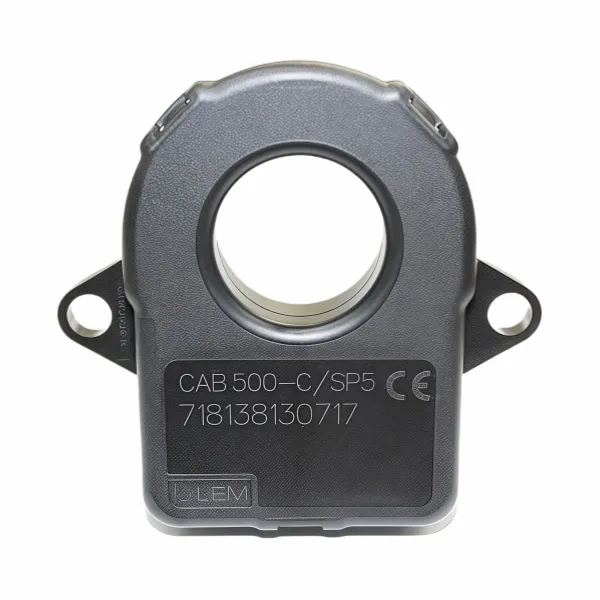
As a current sensor supplier, I'd like to mention one of our popular products, the LEM CAB500C 12V CAB500 Current Sensor. This sensor is known for its high accuracy and reliability, and the methods I've described above can be effectively used to measure its DC offset.
If you're in the market for current sensors or have any questions about DC offset measurement or our products, don't hesitate to reach out. We're here to help you find the right solutions for your applications. Whether you're working on a small - scale project or a large - scale industrial application, we have a wide range of current sensors to meet your needs. Contact us to start a procurement discussion and let's work together to ensure the accuracy and reliability of your current measurements.

References
- "Current Sensor Handbook" by various industry experts
- Technical documentation from current sensor manufacturers