

As a dedicated solar inverter supplier, I've witnessed firsthand the growing demand for renewable energy solutions. Solar energy is at the forefront of this green revolution, and a crucial component in any solar power system is the solar inverter. In this blog post, I'll delve into the fascinating process of how a solar inverter converts direct current (DC) to alternating current (AC), shedding light on the technology that makes solar power usable in our homes and businesses.
The Basics of DC and AC
Before we explore the conversion process, let's understand the difference between DC and AC. Direct current is a type of electrical current where the flow of electric charge is in one direction. Solar panels generate DC electricity because the photovoltaic cells within them create a unidirectional flow of electrons when exposed to sunlight. On the other hand, alternating current is a type of electrical current where the flow of electric charge periodically reverses direction. Most household appliances and the electrical grid operate on AC power because it can be easily transmitted over long distances and is suitable for a wide range of electrical devices.
Why Conversion is Necessary
The need for converting DC to AC stems from the fact that solar panels produce DC power, but the majority of electrical devices in our homes and the power grid itself operate on AC power. Without a solar inverter, the DC electricity generated by solar panels would be incompatible with most of our electrical appliances and could not be fed into the grid. Therefore, a solar inverter plays a vital role in making solar energy practical and usable.
Types of Solar Inverters
There are several types of solar inverters available in the market, each with its own unique features and applications. The main types include string inverters, microinverters, and hybrid inverters.
- String Inverters: These are the most common type of solar inverters. They are connected to a series (or "string") of solar panels. All the DC power from the string of panels is sent to the string inverter, which then converts it into AC power. String inverters are cost - effective and suitable for large - scale solar installations.
- Microinverters: Unlike string inverters, microinverters are installed on each individual solar panel. Each microinverter converts the DC power from its associated panel directly into AC power. This setup allows for better performance optimization, especially in situations where some panels may be shaded or have different orientations.
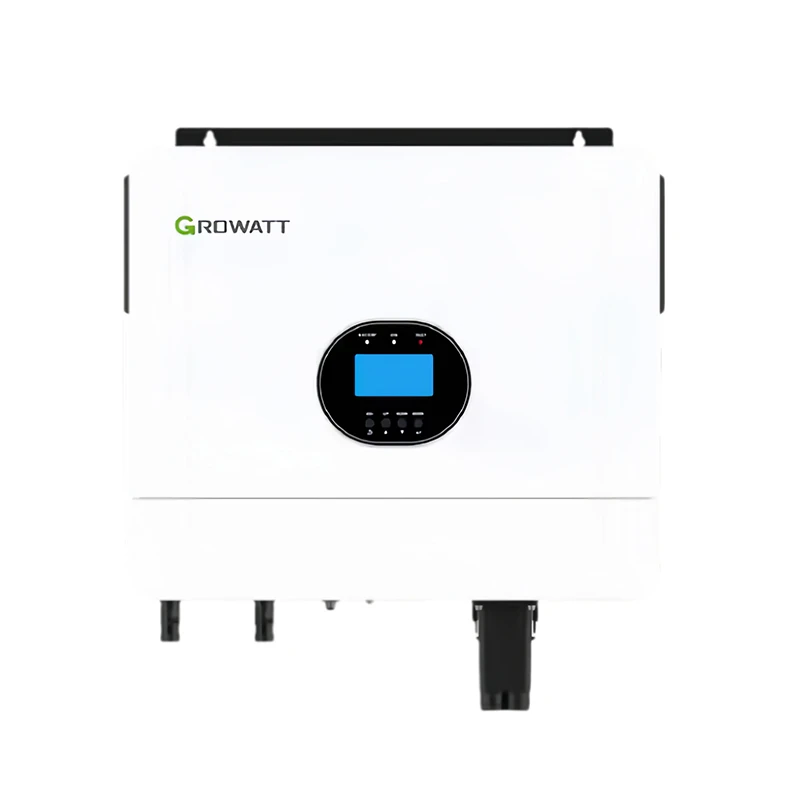
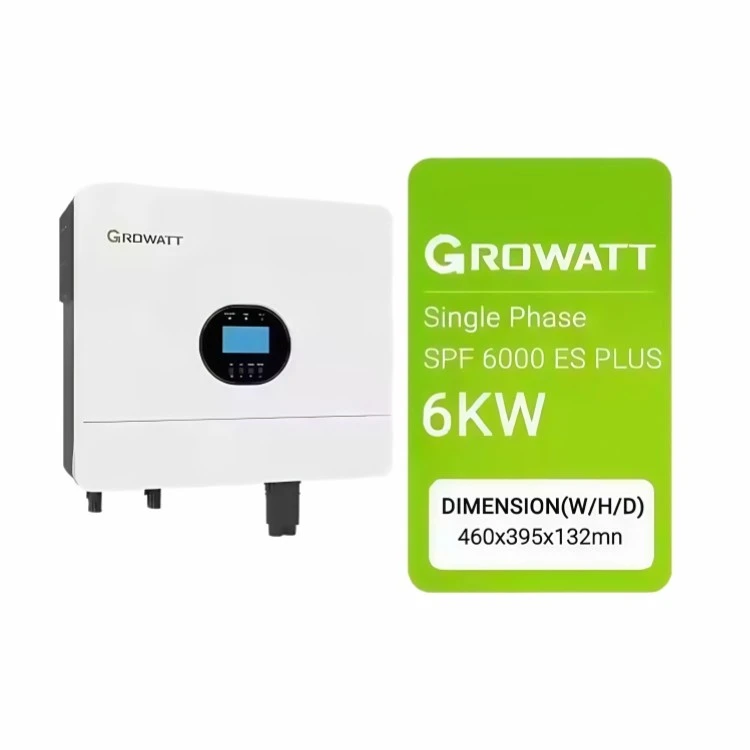
- Hybrid Inverters: Hybrid inverters are a combination of a solar inverter and a battery charger. They can not only convert DC power from solar panels into AC power but also manage the charging and discharging of a battery storage system. This makes them ideal for off - grid or grid - tied systems with energy storage capabilities. For example, our Growatt Off Grid 6Kw/48V SPF 6000 ES Plus Inverter and Hybrid Solar 5Kw 24Series Storage Inverter are excellent examples of high - quality hybrid inverters.
The Conversion Process
The process of converting DC to AC in a solar inverter is a complex one that involves several key steps and components.
Step 1: DC Input
The first step is the collection of DC power from the solar panels. The solar panels are connected to the input terminals of the solar inverter. The DC power generated by the panels has a certain voltage and current, which is determined by the number of panels, their orientation, and the amount of sunlight they receive.
Step 2: Maximum Power Point Tracking (MPPT)
Most modern solar inverters are equipped with Maximum Power Point Tracking (MPPT) technology. MPPT is a technique used to optimize the power output of the solar panels. Solar panels have a characteristic curve that shows the relationship between the voltage and the power output. The MPPT controller continuously adjusts the operating point of the solar panels to ensure that they are always operating at their maximum power point, regardless of the changing environmental conditions such as sunlight intensity and temperature. This helps to maximize the amount of DC power that is fed into the inverter.
Step 3: Inversion
Once the DC power is optimized by the MPPT controller, it is ready for the actual conversion from DC to AC. This is achieved through a process called inversion. Inside the inverter, there are electronic switches, usually made of semiconductor devices such as insulated - gate bipolar transistors (IGBTs) or metal - oxide - semiconductor field - effect transistors (MOSFETs). These switches are controlled by a sophisticated control circuit.
The control circuit rapidly switches the DC input on and off at a high frequency. By carefully controlling the switching pattern of these switches, the DC power can be transformed into a series of pulses. These pulses are then shaped and combined to form an AC waveform. The most common type of AC waveform produced by solar inverters is a sine wave, which is similar to the waveform of the power supplied by the electrical grid.
Step 4: Filtering
After the inversion process, the AC waveform may contain some high - frequency noise and harmonics. To ensure that the output AC power is clean and suitable for use with electrical appliances, a filtering stage is employed. The filter circuit removes the unwanted high - frequency components and smoothes out the AC waveform, making it more stable and similar to the standard AC power supplied by the grid.
Step 5: Output and Grid Connection
Once the AC power is filtered, it is ready to be used. In a grid - tied system, the AC power can be fed into the electrical grid. The inverter ensures that the output AC power has the correct voltage, frequency, and phase angle to be compatible with the grid. In an off - grid system, the AC power can be directly used to power household appliances or stored in a battery for later use. Our High Quality Solar Inverter 3Kw OFF Grid Hybrid Solar is a great option for off - grid applications.
Advanced Features of Modern Solar Inverters
Modern solar inverters come with a range of advanced features that enhance their performance, efficiency, and reliability.
- Monitoring and Communication: Many solar inverters are equipped with monitoring systems that allow users to track the performance of their solar panels and the inverter itself. These systems can provide real - time data on power output, energy production, and system efficiency. Some inverters can also communicate with smartphones or other devices via Wi - Fi or Bluetooth, enabling remote monitoring and control.
- Safety Features: Solar inverters are designed with multiple safety features to protect the system and the users. These features include over - voltage protection, under - voltage protection, over - current protection, and short - circuit protection. In case of any abnormal conditions, the inverter can automatically shut down to prevent damage to the system.
- Efficiency Optimization: Manufacturers are constantly working to improve the efficiency of solar inverters. Higher efficiency means that more of the DC power from the solar panels is converted into usable AC power, resulting in greater energy savings and a better return on investment for the solar power system.
Conclusion
In conclusion, the process of converting DC to AC in a solar inverter is a complex yet essential one that enables us to harness the power of the sun and use it in our daily lives. As a solar inverter supplier, we offer a wide range of high - quality solar inverters, such as the Growatt Off Grid 6Kw/48V SPF 6000 ES Plus Inverter, Hybrid Solar 5Kw 24Series Storage Inverter, and High Quality Solar Inverter 3Kw OFF Grid Hybrid Solar, to meet the diverse needs of our customers.
If you are interested in purchasing solar inverters for your solar power project, we invite you to contact us for a detailed discussion about your requirements. Our team of experts is ready to assist you in choosing the right solar inverter for your specific application and to provide you with the best possible solutions.
References
- "Solar Power Systems: Design and Analysis" by Soteris A. Kalogirou
- "Photovoltaic Systems Engineering" by Markvart, T. and Castaner, L.
- Manufacturer's manuals of various solar inverters